
Shot on · 2024
Dune: Part Two
Fraser went back to rehoused Soviet-era glass, from the same Ukrainian workshop that prepared the lenses for The Batman.
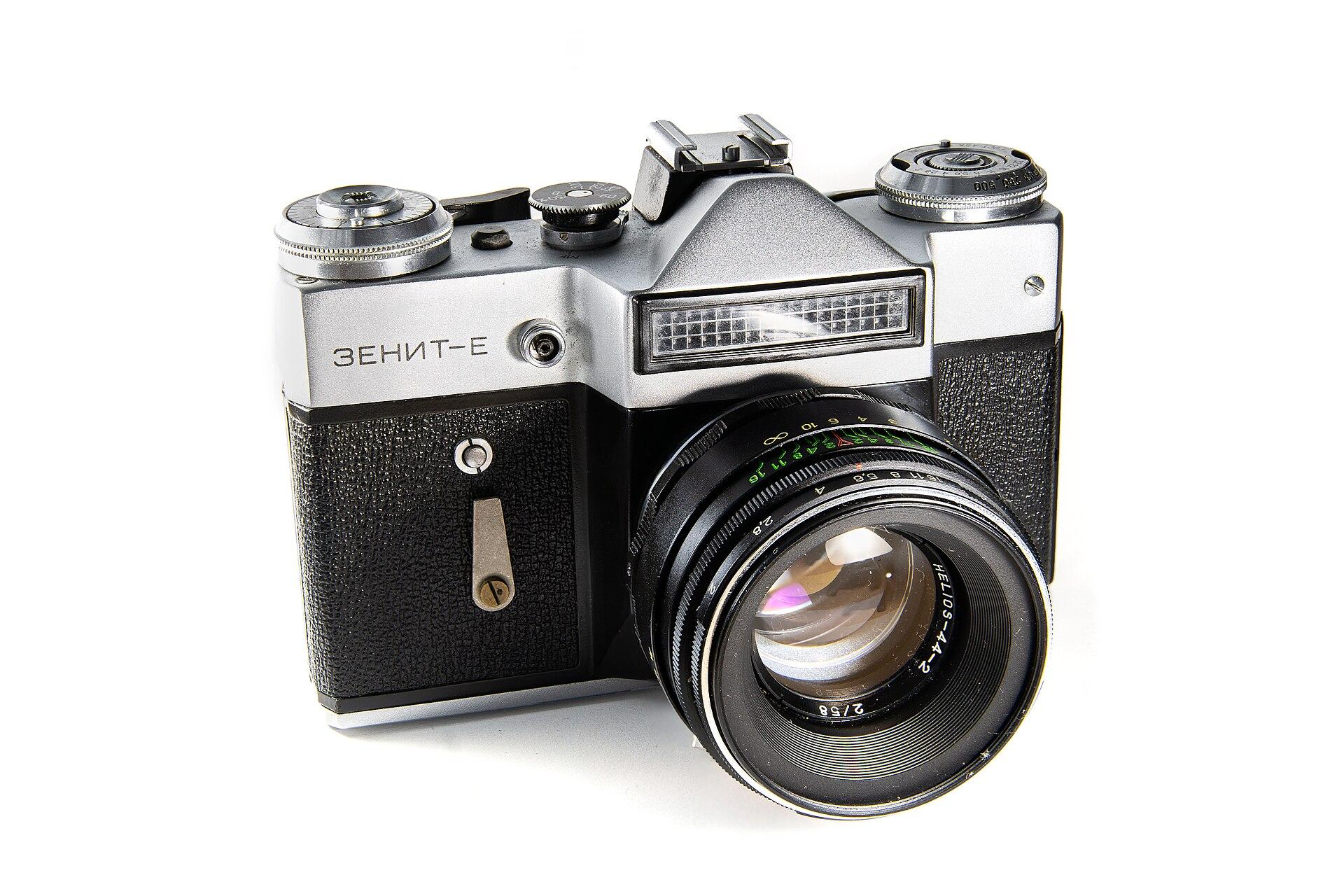
Photo: Anil Öztas · CC BY-SA 4.0 · Wikimedia Commons

The lenses
Greig Fraser carried three kinds of glass. The first was ARRI Rental’s Moviecam lenses: Olympus stills lenses that Moviecam rehoused for film cameras in the 1980s. The second was his own set of Optica Elite primes. The third was the rehoused Soviet-era lenses from IronGlass that he had used on The Batman.
Why those
Fraser says he chose lenses by which part of the story they had to tell. The Moviecams are the sharper ones. They went on the sandworm ride, where wind, sand and haze needed all the texture a lens could resolve, and on the arena fight and the infrared scenes.
For the desert and for more of Paul’s story he used the IronGlass and Optica Elite lenses, which are softer and have more character.
The camera
The ARRI Rental Alexa 65 again, as on the first film, with Alexa LF and Mini LF cameras where he needed more bodies or smaller ones.
The picture opens to the tall IMAX shape for the same reason as in the first film. There it did so whenever Paul was on Arrakis, and the second film takes place almost entirely on that planet.
Who shot it
Greig Fraser, for director Denis Villeneuve. Villeneuve says the two wanted to push their own visual language rather than repeat the first film.
How it did
Dune: Part Two took $715 million worldwide, the seventh-highest total of 2024. It was nominated for five Academy Awards, including best picture, and won two.
Worth knowing
Fraser uses the film to make a case for the small workshops that rehouse old stills lenses for cinema. He calls it a democratisation of lens-building, and says the firms doing it should be encouraged.
Watch
Behind the scenes.
Our episode
Is the Helios 44 Secretly a Zeiss? The Truth Is Worse
From Dolby · 28 min
Greig Fraser on the cinematography of Dune: Part Two
From Oscars · 13 min
Dune: Part Two, with Denis Villeneuve and the filmmakers
From Variety · 9 min
Greig Fraser breaks down the worm ride
The lenses, at a glance
ARRI Rental Moviecam
Rehoused Olympus stills lenses: the sandworm ride, the arena fight, the infrared scenes
Lens File: ARRI Rental Moviecam →Helios 44-2 58 mm, rehoused by IronGlass
The desert and Paul’s story; three of them
Lens File: Helios 44 →Jupiter-9 85 mm, rehoused by IronGlass
The desert and Paul’s story; three of them
Lens File: Jupiter 9 →Mir-1V 37 mm, rehoused by IronGlass
The desert and Paul’s story; three of them
Mir-1: the lens page →Optica Elite primes
Fraser’s own set
Lens File: Optica Elite →Zero Optik Rokkor
Lens File: Zero Optik Rokkor →
Get the look
Start with the same lenses.
Read more
The film
- Cinematographer
- Greig Fraser
- Camera
- ARRI Alexa 65; Alexa LF and Mini LF
- Budget
- $190 million
- Box office
- $715 million worldwide
- Awards
- Five Oscar nominations, two wins
Sources