
The look of early photography
Baltars from the 1940s, Petzval designs that go back to 1840 and Cooke Speed Panchros: four films that reached for glass older than the cinema they were made for.

The Lighthouse (2019)
Baltar lenses from the early 1940s in a nearly square frame, on black-and-white Double-X film, with three Petzval-type lenses that Panavision’s Dan Sasaki made for the film.
Blaschke wanted to find out how much character a lens could bring before the picture tipped from transporting into kitsch. He asked Panavision for old lenses that were not on the menu, and tested Cooke Series 1s, a deliberately detuned modern lens, an uncoated triplet from 1905 and the Baltars.
The Baltars won. He calls them the most glowing portrait lenses he had seen, without going too soft or flaring too much, and he singles out the way highlights shimmer. They also let through a lot of blue and ultraviolet light, which suited the look he was after.
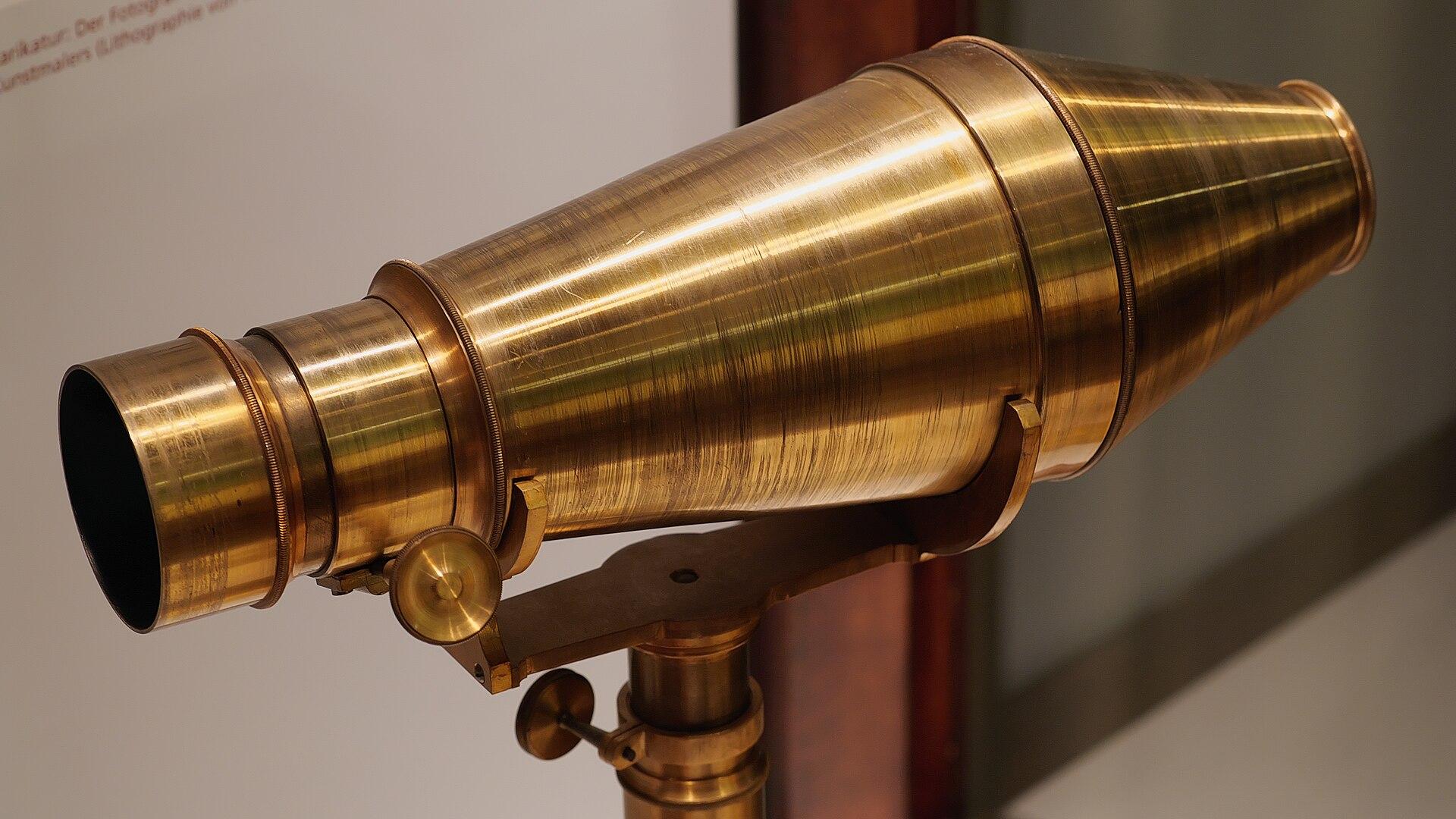
The Petzvals swirl the out-of-focus background, more heavily towards the edges. Blaschke says plainly that it is not a subtle effect, which is why they were kept for a few moments only.
Nosferatu (2024)
Blaschke went back to Baltars, this time paired with custom optics that Panavision built after the look of old photographic lenses.
He had loved the Baltars on The Lighthouse and wanted to see them in colour. He says they give a pastel colour, partly because they carry only a single coating, and that they are neutral rather than warm. The later Super Baltars have thorium in the glass, which turns them orange with age. These were made before that.
They do flare, and not equally: some serial numbers flare more than others. Blaschke used each lens according to how easily it flared.
Poor Things (2023)
Ryan mixed old projector Petzvals with a 16 mm fisheye that doesn’t cover the 35 mm frame, which is where the round, heavily vignetted shots come from.
Yorgos Lanthimos had been looking at photographs from the period and wanted that look. Putting a 16 mm lens on a 35 mm camera was Ryan’s way of getting it. The Petzvals were there for the softness of early photography.
Ryan says people remember the fisheye because it announces itself, but that it is one lens among many. He also says that lenses are nearly the only thing he and Lanthimos discuss. Camera and film stock hardly came up.
The Witch (2016)
Blaschke chose Cooke Speed Panchro Series II lenses and filled out the set with Super Baltars and Panavision Super Speeds.
For what the Speed Panchros do to a background. Blaschke describes the out-of-focus areas as swirling, and says that together with the darkening at the corners it pulls the eye to the middle of the frame, which suits symmetrical compositions. He compares it to looking through a porthole or into a crystal ball.
The Baltar: a design from the 1930s
The Baltars were designed in the 1930s and sold as bare optical cells, to be built into whatever focusing mount a camera needed. The set on The Lighthouse is that design; it is the serial numbers that date from 1941 to 1944.
The Speed Panchro, and why Hollywood wanted it
Cooke says the Speed Panchro line was created for cinema by 1930. The timing mattered. Sound film meant the noisy arc lamps could no longer be used on set, and with less light, studios needed faster lenses. The Series II, designed by Gordon Cook, followed in 1945.
On The Witch, about 85 percent of the film was shot on a single 32 mm Speed Panchro. The Super Baltar and the Super Speed came out only for a few shots lit by flame.
Why a Petzval swirls
The swirl in the background is a side effect of the design. Panavision puts it down to astigmatism, and Jarin Blaschke says it gets very heavy toward the edges of the frame. On The Lighthouse the Petzvals were kept for particular moments.
Film that sees like 1890
The lenses were half of it. The Lighthouse was shot on Kodak Double-X, a black-and-white stock introduced in 1959, through a filter made to order by Ron Engvaldsen at Schneider Optics. It lets through light from ultraviolet to mid-yellow and blocks orange, red and infrared, with the cut at 570 nanometres.
That is how the earliest film stocks saw the world. Skin, which is orange and red, records darker, and every blemish and line on a face stands out. The price was light: Blaschke was in effect working at 80 ASA.
Two kinds of custom glass on Nosferatu
The custom lenses on Nosferatu were of two kinds. The first were very fast lenses, a 27 mm, a 35 mm and a 40 mm, the fastest of them T0.9, made so that scenes could be lit by real fire and candles, and engineered to sit alongside the Baltars.
The second were built on the Dagor, a design from still photography. A little spherical aberration makes the highlights glow. The film’s moonlight came from a filter first made for The Northman, itself a variation on the one made for The Lighthouse.
Watch
Behind the scenes.
From Film Independent · 62 min
Robert Eggers shares his design book for The Lighthouse
From Dolby · 69 min
Jarin Blaschke and Robert Eggers on the cinematography of Nosferatu
From Dolby · 44 min
The cinematography of Poor Things, with Robbie Ryan
From Panavision · 59 min
Jarin Blaschke and Dan Sasaki on the lenses of the Eggers films
The films
Sources
- American Cinematographer: Stormy Isle: The Lighthouse
- Panavision: Jarin Blaschke and Dan Sasaki discuss vintage and custom lenses
- Wikipedia: The Lighthouse (2019 film)
- American Cinematographer: Nosferatu Exhumes a Vampire Classic
- Wikipedia: Nosferatu (2024 film)
- British Cinematographer: Robbie Ryan BSC ISC / Poor Things
- Wikipedia: Poor Things (film)
- American Cinematographer: Conjuring a Coven for The Witch
- Wikipedia: The Witch (2015 film)
- American Cinematographer: Zero Optik rehouses Baltars
- Cooke Optics: Speed Panchro
- Cooke Optics: Cooke history
- Film and Digital Times: Cooke Speed Panchro Series II
- Kodak: Robert Eggers’ The Lighthouse
- Kodak: Nosferatu