
Ten lenses, three wicks, no moon
The f/0.7 lens that let Stanley Kubrick film by candlelight is real, rare and built for NASA. The famous story about it and the moon is not.
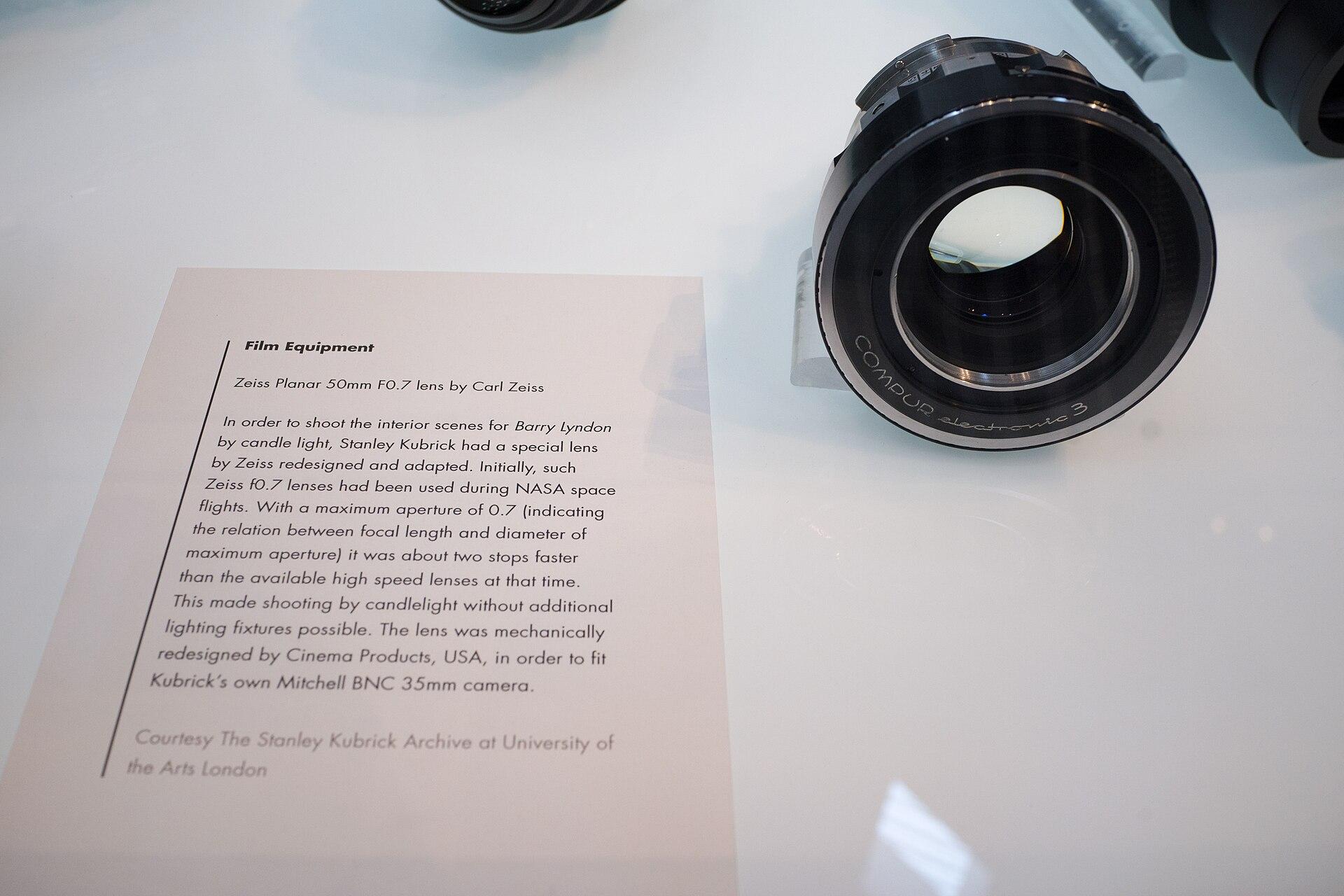
Photo: Gbentinck · CC BY-SA 4.0 · Wikimedia Commons

Ten were made
The Zeiss Planar 50 mm f/0.7 is among the fastest lenses ever built. It was developed for NASA’s Apollo programme in 1966, and Zeiss made only ten.
Six went to NASA. Stanley Kubrick got three. Zeiss kept one.
Candles with three wicks
Kubrick used the lens for the candlelit interiors of Barry Lyndon (1975), and with it he could film those scenes without any added light.
The candles had some help. They were made with three wicks each, which burn a little brighter than ordinary candles. Jan Harlan, Kubrick’s executive producer, collected the lens from Zeiss in Oberkochen in 1972. Fifty years later he brought one back, on loan to the Zeiss Museum of Optics, along with two of the candles.
The moon story
The lens is often said to have photographed the far side of the moon before Kubrick got it. Zeiss says there is no evidence for that.
The lunar photographs of 1968 and 1969 were taken with a different Zeiss lens, the Biogon. The f/0.7 was built for the space programme; that part is true. What it shot there, nobody has shown.
Watch
Behind the scenes.
From Turner Classic Movies · 49 min
The Trials of Barry Lyndon
From Oscars · 4 min
Ryan O’Neal on making Barry Lyndon
Quick answers
- How many Zeiss f/0.7 lenses were made?
- Ten: six for NASA, three for Stanley Kubrick and one kept by Zeiss.
- Did the lens photograph the far side of the moon?
- Zeiss says there is no evidence that it did.
Sources